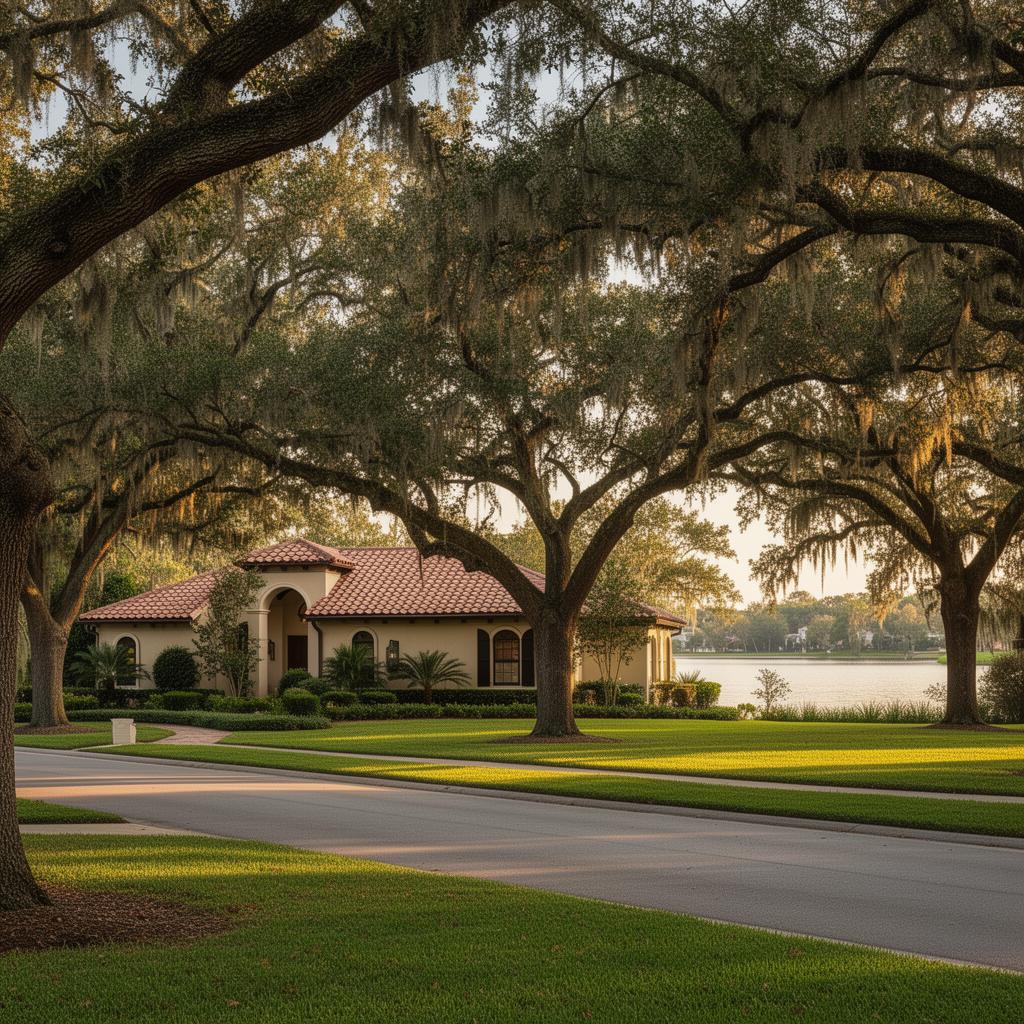
Central Florida is the most under-shuttered metro in the state, and it's a mistake. The Orlando area sits a hundred miles from either coast, which fools homeowners into thinking they're safe — but Hurricane Charley (2004), Irma (2017), and Ian (2022) all delivered sustained tropical-storm to Cat-1 winds well inland. Most homes here are unprotected. The neighborhoods that take this seriously share three traits: master-planned HOAs that push back on visible accordion housings, lakefront exposure with long wind fetch over open water, and older Winter Park / College Park stock that needs careful opening assessment before any retrofit. Code-wise, Central Florida is standard Florida Building Code — not HVHZ — so the product approval conversation is FL numbers, not Miami-Dade NOAs.
Local challenges that actually matter
HOA / ARB approval is the actual gatekeeper
In Celebration, Lake Nona, Windermere's gated enclaves, Reunion, Baldwin Park, and parts of Dr. Phillips, architectural review boards routinely reject visible accordion housings on front-facing elevations. The decision often becomes roll-down (housing tucked into the soffit) or impact glass — both at a meaningful cost premium over the accordion default.
Lakefront wind fetch
Butler Chain, Lake Nona, Lake Conway, the Winter Park chain, and Lake Apopka generate wave-driven debris with a mile or more of open water as runway. Lakefront elevations face an exposure most homeowners (and some installers) underestimate. Roll-downs with battery backup are worth the upgrade on the lake side even if the rest of the home runs accordions.
Pre-2002 construction in older neighborhoods
Winter Park, College Park, Belle Isle, Maitland, parts of Oviedo, and Lake Eola Heights have substantial pre-Florida-Building-Code stock. Openings often aren't square or plumb, frames are sometimes wood-framed at shallow depths, and standard accordion kits don't always fit without extended brackets. Insist on a contractor who measures each opening individually rather than quoting from a builder plan.
Insurer behavior is changing
Citizens and several private carriers now ask Central Florida applicants for wind-mitigation documentation that homeowners here historically didn't bother with. The credit is the same OIR-B1-1802 form South Florida uses; the difference is that not having it is starting to affect renewal terms inland too.
Neighborhoods we cover
Neighborhood-by-neighborhood notes
The right hurricane protection in Central Florida depends as much on your block as on your house. Here's what we've heard from homeowners in each area.
Winter Park & Maitland
Mature canopy, older stockWinter Park's brick-paved streets, the Park Avenue district, and the Winter Park chain of lakes give the area its character — and its risk. The 1920s–1950s housing stock around Mead Botanical Garden, Genius Drive, and Old Winter Park has shallow wood-framed window depths that standard accordion kits often can't accommodate without extended brackets. The city historic preservation board reviews exterior changes on designated structures (not the entire city — check your specific address). For most homeowners here, the practical answer is impact glass on the front-facing elevations where shutter housings would read poorly, and accordions on the rear and side elevations where they don't. Lakefront homes on Lake Virginia, Lake Osceola, and Lake Maitland should treat the water side as a separate spec entirely.
Windermere & Dr. Phillips
Butler Chain lakefront, strict HOAsWindermere proper, Isleworth, Keene's Pointe, and the gated Bay Hill / Dr. Phillips enclaves are where Central Florida's HOA-approval problem is sharpest. Architectural review boards here almost always reject visible accordion housings on front and side elevations facing common areas. The practical product set narrows to roll-downs (housing tucked into the soffit), impact glass, or hidden-track motorized solutions — all at a 40–70% premium over accordions. Submit your ARB packet with the product NOA / FL approval, color and finish samples, and elevation drawings BEFORE ordering. Butler Chain lakefront homes (Lake Down, Lake Butler, Lake Tibet-Butler, Lake Sheen) face the longest open-water fetch in Central Florida — battery-backup roll-downs are genuinely worth the upgrade on the lake elevation.
Lake Nona & Medical City
Master-planned, ARB-drivenLake Nona's master plan dictates the visual language of the community, and its architectural review process is among the most actively enforced in the metro. Accordion shutters on street-facing elevations rarely clear review. Most homeowners here end up on impact windows (often pre-installed in newer construction) or hidden-housing roll-downs. Verify your builder's window package before assuming you're covered — Lake Nona builders use a mix of FL-approved impact and non-impact glazing depending on the model and price point. New construction is the right time to upgrade; the retrofit math here is punishing once the home is sold-on.
Celebration & Reunion
Disney-influenced design rulesCelebration's original Disney design vocabulary (the Celebration Pattern Book) and Reunion's gated golf-community rules both heavily restrict visible exterior hardware. Bahama and colonial shutters in approved colors sometimes clear review where accordions don't — particularly on the older Celebration housing stock around the downtown core. For newer Celebration neighborhoods (Artisan Park, Roseville Corner) and Reunion's golf-front estates, impact windows are usually the line of least resistance. Plan for 4–8 weeks of ARB review BEFORE permitting — the ARB queue is the slow step, not the building department.
Baldwin Park, College Park & downtown Orlando
Mixed era, mixed HOA strengthBaldwin Park's new-urbanist plan has its own ARB with clear preferred-product lists; expect roll-downs or impact glass on Lake Baldwin frontage. College Park's pre-WWII bungalows around Edgewater Drive have the same shallow-frame issue as Winter Park — measure carefully. Downtown Orlando condos (around Lake Eola Heights and Thornton Park) are usually governed by the condo association: balcony and window changes typically need board approval and matching specs. For non-HOA neighborhoods in College Park and Audubon Park, you have flexibility — but the older the home, the more important the structural pre-assessment.
Oviedo, Clermont & the outer ring
Newer construction, fewer HOA hurdlesOviedo (especially Live Oak Reserve, Twin Rivers), Clermont's hill country subdivisions, and similar post-2002 neighborhoods in Seminole and Lake counties are the easiest accordion territory in Central Florida. HOAs here are generally less restrictive than the master-planned communities closer to Orlando, code is current FBC, and lot sizes give installers room to work. Most homeowners here get full-house accordion coverage for $10,000–$18,000 with minimal ARB friction. The exception is lakefront Clermont (Lake Minneola, Lake Louisa) — same wind-fetch logic as the Butler Chain applies.
Recent storm context
Hurricane Ian (September 2022) made landfall in Southwest Florida but tracked diagonally across the state and dropped tropical-storm to weak Cat-1 sustained winds across the entire Orlando metro. Roof damage, screen-enclosure failure, and tree-strike claims spiked across Orange, Seminole, and Osceola counties — most of it on homes that had never installed any opening protection. Hurricane Irma (2017) did the same thing five years earlier with the same lesson, and Hurricane Charley (2004) crossed straight through downtown Orlando as a Cat-1. The pattern is unambiguous: inland Central Florida sees a meaningful inland storm roughly every 5–8 years.
Local advice
- If you're in a master-planned HOA (Celebration, Lake Nona, Windermere, Reunion, Baldwin Park), get the ARB hurricane-protection section in writing BEFORE you call any installer. The product decision is downstream of what your community will approve.
- On lakefront elevations, treat the lake-facing windows as a separate spec from the rest of the house. Roll-downs or impact glass on the water side, accordions elsewhere, is a common and rational split.
- For homes built before 2002, budget for a structural pre-assessment — not just a sales measurement. Older Winter Park bungalows and College Park homes frequently need opening reframing before impact glass goes in to code.
- Don't skip the Wind Mitigation Inspection just because you're inland. Most Central Florida carriers honor the same OIR-B1-1802 credit Coastal Florida does, and the form costs $75–$150 to file.